The sun is a star of spectral class G2V, meaning that it is a typical main-sequence star of spectral class G2. The sun is about 4.6 billion years old and is about halfway through its main-sequence lifetime. The sun has a mass of about 2 x 10^30 kg and is about 1.4 million km in diameter. The sun’s surface temperature is about 5,500 degrees Celsius and its interior temperature is about 15 million degrees Celsius. The sun is about 150,000 times as bright as the full moon and has a luminosity of about 3.8 x 10^26 watts.
G V stars, also known as yellow dwarf stars, are located in the outer solar system. Its members are known as the Population I group of stars because their material contains a relatively large amount of heavy elements. It has already lived for about 4 billion years, and it is expected to live for another 7 billion years or so.
As an example, our Sun is a G2 V, which means it is the spectral class (that it is a yellow-white star), and it is the luminosity class (that it is a main-sequence star).
This star is a type G2 star, which is a type of star in the G2 family. It has a surface temperature of around 6000 degrees Celsius and a magnitude of +15.
Stars, in general, produce their own energy by fusing together to form a gas. These glowing spheres, like round gas cylinders, produce energy from the combustion of gases. The hydrogen reaction between Helium and water generates energy in the fusion reaction that transforms it into hydrogen in the solar system.
Is The Sun A Class K Star?
There is no definitive answer to this question as there is no agreed upon definition for what constitutes a class k star. However, based on the most commonly used criteria, it is unlikely that the sun is a class k star. This is because class k stars are generally defined as being redder and cooler than the sun. Additionally, class k stars are often considered to be a transitional stage between class m stars (red dwarfs) and class g stars (yellow dwarfs), and the sun is generally classified as a class g star.
Many stars and up are estimated to have M-dwarf populations – some estimates range between 70% and 80%. If habitable worlds were discovered around them, it would greatly expand the possibilities for life in the Universe. These conditions do not appear to be Earth-like, even if the early Earth had its own harsh ultraviolet radiation onslaught. It has been tens of billions of years since a K star’s habitable zone was discovered. When a star’s mass is ejected, charged particles are carried by the current as an anti-magnetic field. It is also effective at shielding against cosmic rays of high energy. We do know that the nearest such star to Earth is K-dwarf Alpha Centauri B, but we do not yet know what happens to planets after they form.
Astronomers will soon begin looking for planets in Alpha Centauri. Planets larger than the Earth by two or three times their mass are excellent candidates forextraterrestrial life. A much stronger magnetic field was formed as a result of the Sun rotating ten times faster than it had previously. When the young solar system was young, it emitted several hundred times the amount of X-rays and ultraviolet radiation as it does now.
At the halfway point of its life, the Sun is about halfway through its life span. The Milky Way will eventually see its light penetrate the planet and some of its neighboring stars, and it will eventually grow to the size of a red giant and devour the planets and some of the neighboring stars. As a result, massive amounts of energy are released into the atmosphere, causing a series of dramatic events to occur in the surrounding area.
Is The Sun A Class B Star?
Their surface temperature is around 6000 C and they produce a bright yellow, almost white color. Despite the fact that our sun is a white dwarf star because all of its colors are blended together, it is a G-type star. The Sun, a yellow dwarf, is a G-type main-sequence star.
B Stars: Hot Stars With H And Hei
What are B stars? The presence of hydrogen (H) and neutral helium (HeI) in optical spectrum distinguish a B star from a normal star. HeI decreases as H line strength rises among the B star subclasses. What does this mean for the color of the earth? The majority of B stars are bluer than A stars, which are redder. Blue-white O-type stars and yellow-white A-type stars are the two types of stars.
Is Our Sun A Type G2 Star?
As a G2 V star, Sun is classified as the second hottest star in the yellow G class–which has a surface temperature of about 5,800 kelvins (K)–and the V representing a main sequence, or the typical star of this temperature class.
Spectral Class Of Stars
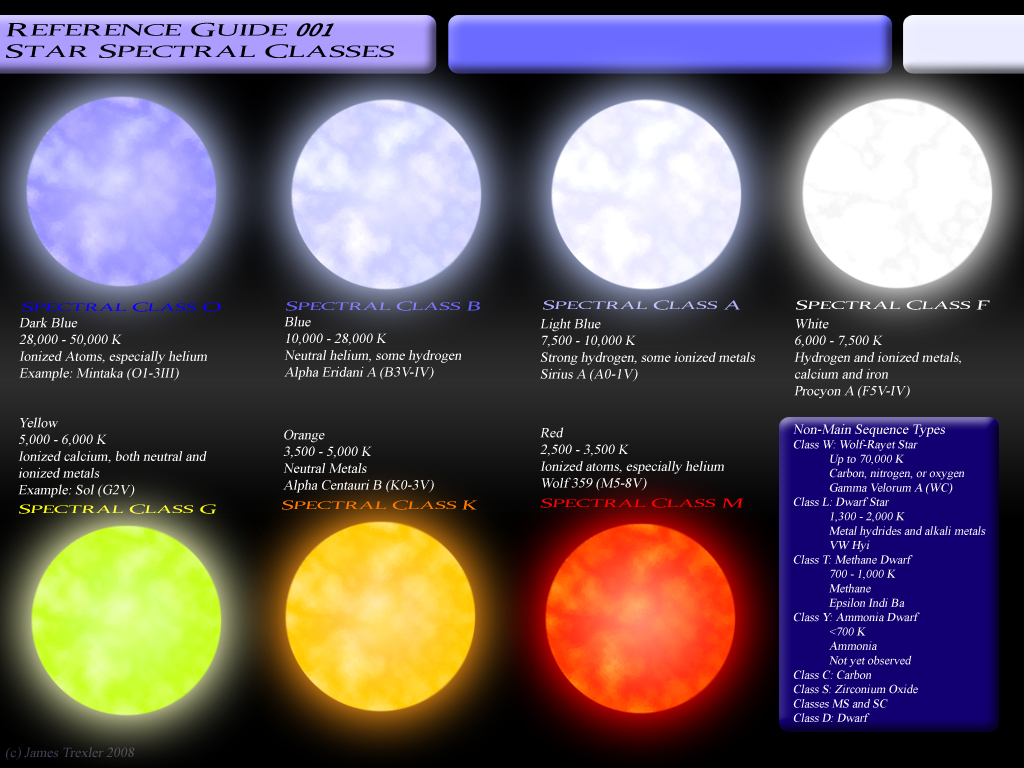
The spectral class of a star is a measure of the star’s surface temperature and is represented by a letter. The spectral classes are: O, B, A, F, G, K, and M. The O class is the hottest and the M class is the coolest.
According to William Wollaston in 1802, sunlight does not appear to have a continuous pattern of colors, but rather a series of dark lines superimposed on it. In 1814, Joseph Fraunhofer made a more precise set of observations of the solar spectrum, resulting in the discovery of approximately 600 dark lines. In the Yerkes scheme, there are six types of luminosity. It is common to refer to these stars as early spectral types in the early years of the universe. Late-type stars (for example, G, K, and M) are cool stars in the constellation Sagittarius. Stars in the asymptotic giant branch are thus doomed to decay over time. It’s not possible to burn helium in a stable manner.
Energy is generated by turbulence, which transports material all the way to the hydrogen burning core. Heavy elements such as zirconium, yttrium, and barium are found in S type stars. A wolf-rayet star (WR) and a tular star (T) are both constellations.
What Spectral Class Of Stars Is The Coolest
Stars with M-type spectral types exhibit surface temperatures ranging from 2,400 to 3,700 K, making them the reddest and coolest of the common types.
Class M Stars Are What Color
Class M stars are what color? They are red.
The red dwarf is by far the most common type of luminous star, accounting for approximately 76% of all major sequence stars. The colors of these fruit are usually orange or red. They have a surface temperature of 3,000 degrees Celsius (2,400 degrees Fahrenheit to 3,790 degrees Celsius). Because the mass and luminosity of red dwarf planets are low, many of them will end up frozen or tidally locked to their parent stars; these conditions are generally not good for intelligent life. A red dwarf is a star that forms from pre-main sequence stars and will remain in the main sequence for trillions of years. A Class M star is typically one that has been partially heated up by residual heat from the star’s formation. They will eventually radiate their residual heat and form Class L stars, which will be heated by hydrogen fusion.
The Different Types Of Stars In The Universe
Are stars with spiral shape similar to those of the M-type? Are they more bright/illuminating?
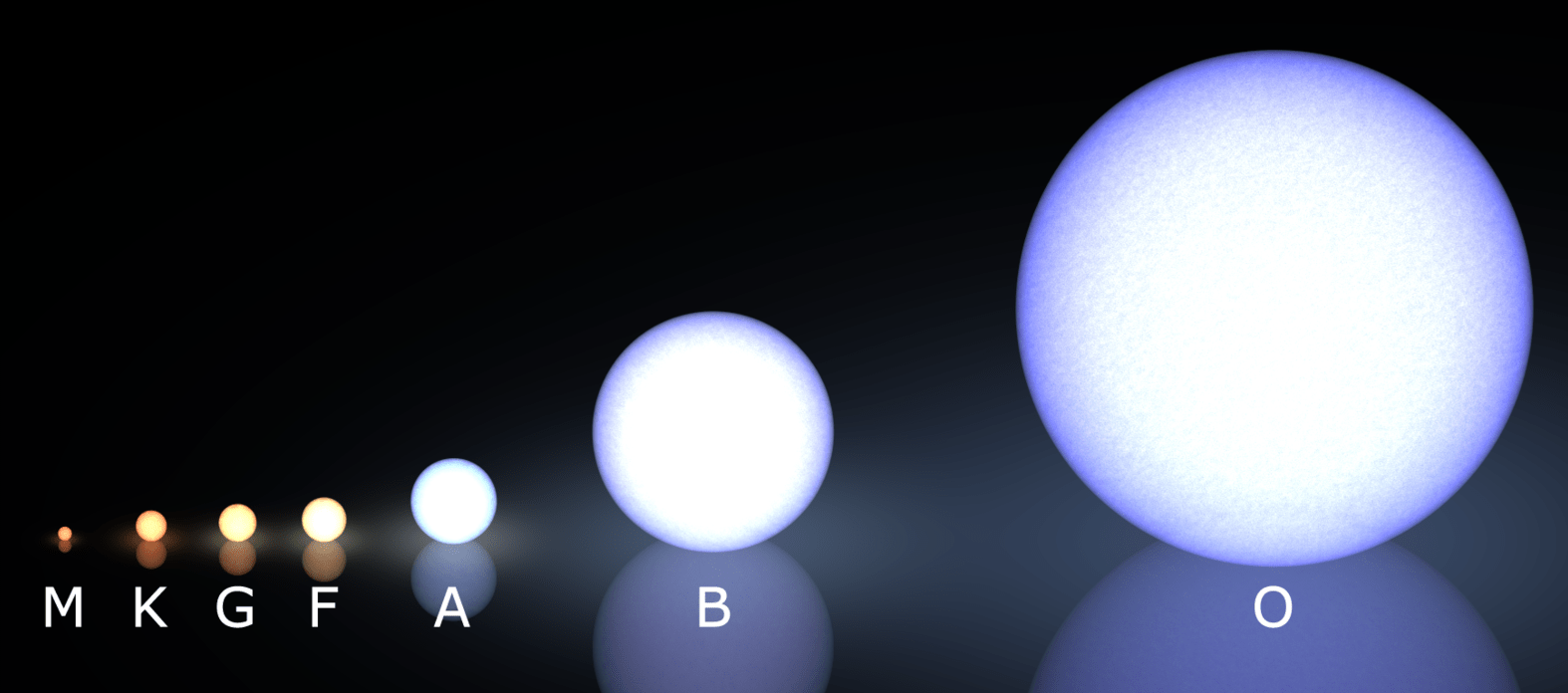
M-type stars are generally cooler and dimmer than O-type stars. The video below shows you a quick look at the types of stars in our universe. When a star’s color is visible, it has a spectral class. O, B, and A-type stars, as well as white and blue stars, appear to be blue and white, respectively. Stars in the F and G bands appear yellow to orange in color, while stars in the K and M bands appear orange to red in color.