
There are many types of stars in the universe, each with their own unique characteristics. The brightest stellar type is the blue star. Blue stars are the hottest and most luminous stars in the universe. They are also the rarest type of star, making up less than 1% of all stars. Blue stars have a lifespan of only a few million years, compared to the billions of years for other types of stars.
How bright a star is depends on its composition and distance from Earth. Stars are classified into two types: apparent magnitude and absolute magnitude. Hipparchus developed a catalog of stars based on their brightness over 2,000 years ago. The Hubble Space Telescope has observed objects as small as 31st magnitude. The vast majority of people with average vision can see objects as small as sixth magnitude in dark environments. Astronomers began to develop tools to better measure magnitude in the nineteenth century. Light-sensitive charged-coupled devices, which are available in a variety of sizes and shapes, are the best tools in modern technology.
Stars’ apparent magnitude (or brightness) is determined by the location of the observer. The stars can reach a magnitude of nearly -1.5, whereas the sun can reach a magnitude of -27. The object in the sky that appears to be extremely faint may actually be very bright, but it is far away from Earth. Astronomers are not as well-versed in the most brilliant stars as they should be. Variable stars can be found in the universe in addition to the 100,000 known and cataloged stars. Variable stars in the short run have two distinct flavors: intrinsic and extrinsic. Variable stars are constantly changing, so their fluctuations can last for a long time.
If the North Star, Polaris, had been brighter in ancient times, it would have been as much as 4.5 times brighter than it is today. Variable stars are those that change due to an external cause, such as binary stars. Below are the top 26 brightest stars seen from Earth, with apparent magnitudes and absolute magnitudes in brackets.
The sky is usually bright when there are giants or supergiants. The large size of these crystals makes them extremely bright.
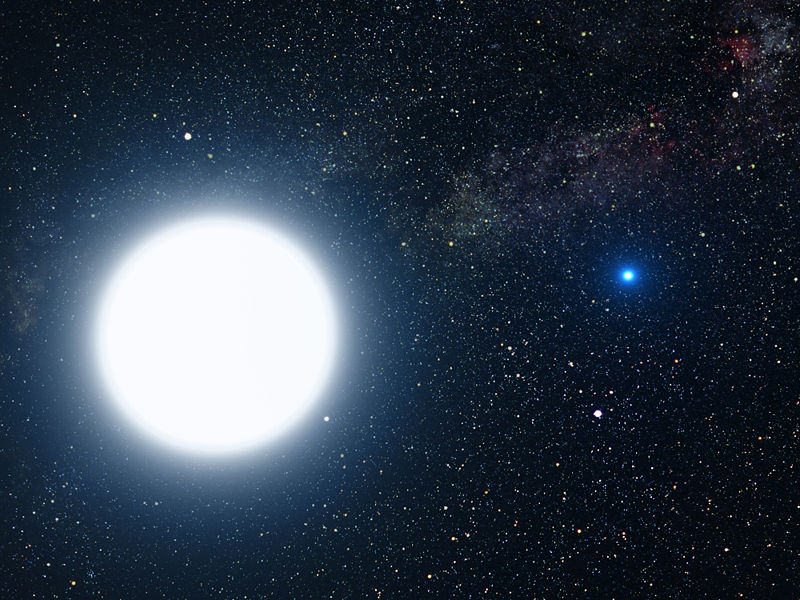
The Dog Star or Sirius A is one of the most brilliant stars in the night sky. The Greek word for glowing implies a few planets, so this star can be compared to only a few planets, the full moon, and the International Space Station. Because of its bright color, the ancients were well aware of it.
According to legend, the magnitude (mV) is 026.74 Sun11.46 Sirius20.74 Canopus3 0.27 ( 0.01 1.33)Rigil Kentaurus and Tolimina
Which Types Of Stars Are The Brightest?
The stars with the greatest and brightest properties are the ones with the lowest Roman numerals – i is a bright supergiant, ib is a bright giant, II is a bright giant, III is a giant, IV is a subgiant, and V, a major sequence or dwarf.
The brightness of a star or galaxy can be calculated as its total brightness. There is an indication that the lights are extremely bright if the numbers are negative. In reality, the full moon is magnitude -12; in reality, the sun is magnitude -26.8. Antares is a red giant supergiant star located 520 light-years away in the M1.5Iab variable star cluster. The star can be seen in the constellation Cygnus (the swan) in the northern sky at night. It is six times more powerful than the sun. Polaris is the current Northern Hemisphere pole star and is located at a distance of one degree from the celestial pole in the northern sky. The constellations in the zodiac are represented by the name Orion, also known as The Hunter.
The distance from the observer determines a star’s brightness (measured on a scale ranging from zero to one). When a star is further away from us, it appears to be dimmer. It is the largest known star (in terms of mass and brightness) because it is so massive. It is thought to be 10,000,000 times brighter than the Sun, and 100 times as massive. In 1990, scientists discovered a star known as the Pistol Star, which was discovered to be at the center of the Pistol Nebula in the Milky Way. When a person looks at a star, its brightness (measured on a scale ranging from zero to one) is affected by its temperature. When a star is in the hotter range, it appears brighter. The temperature of the Pistol Star is more than 1,000,000,000 degrees Fahrenheit, making it one of the hottest stars in the universe. This observation has some relevance: the bright stars are not always the closest to one another. The strongest and most distant stars are the most distant. Some red stars, on the other hand, are brighter than other types of stars, such as white or blue ones, at night. The increase in distance caused by the nearer stars has meant that their cooling has been extended, while their emissions (light) have been allowed to spread out.
The Brightest Stars: Sirius And Eta Carinae
The Dog Star or Sirius A, as it is also known, is the brightest star in the night sky. This star has only a few planets in its sights, and the International Space Station, as well as the full moon, are visible to the naked eye. The Greek word for glowing in Greek sums it up: only a few planets can reach out to this star. Sirius or Dog Star is the shiniest star in the sky at night, but it is officially known as Alpha Canis Majoris because it is located in Canis Major (Latin for “Big Dog”). Blue hypergiant stars, on the other hand, are among the most extreme hot stars in the Universe. The mass of these stars exceeds that of the Sun’s. A relatively new discovery is Eta Carinae, which is located approximately 7,500 light-years from the Sun.
What Kind Of Star Shines Brightest?
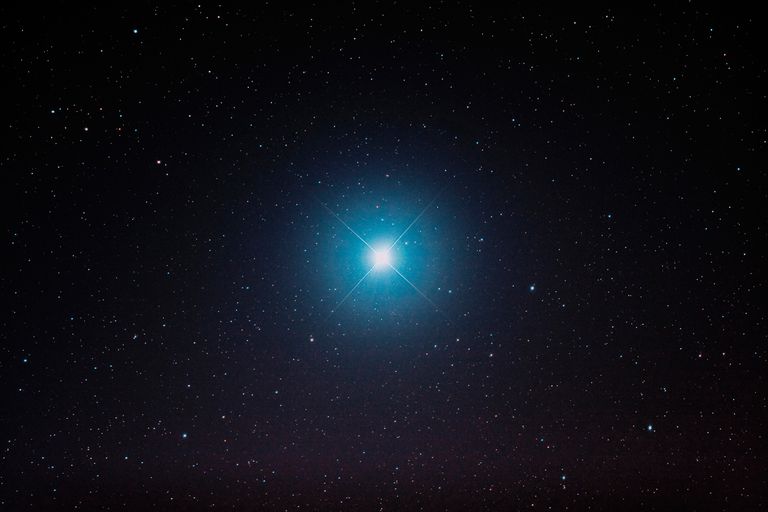
There is no definitive answer to this question as it depends on a number of factors, including the star’s age, mass, and composition. However, generally speaking, the brighter a star shines, the more massive it is. Stars also tend to shine brighter as they age, due to the increased production of energy in their cores.
It is the closest object to us in our solar system, so it is the brighter object. When we see stars from our Earth, we can measure their apparent magnitude. A star’s magnitude indicates how bright it is relative to the rest of the universe, not how bright it is in reality. The absolute magnitude of a star is a measurement based on its brightness at a fixed distance of 10 parsecs or 33 light-years. To see if Betelgeuse is brighter than the Sun, scientists can compare its intrinsic brightness to that of other stars. To put it another way, the table below depicts some of the most significant bright stars based on their apparent brightness. The species is found only on the southern tip of Spain and the Mediterranean islands of Malta and Mykonos.
In the largest star, there are two yellow A and orange B elements. Its surface is located 36.6 light-years away from Earth. The distance between them and the Sun will be nearly 4,000 years in the future. Vega is the bright star in the constellation Lyra, and it is located at a magnitude of 0.3. The solar system is only 25 light-years away from us and has reached the halfway point of its life. This server is built around two sets of binary systems. When the combined Capella systems approached our solar system 237,000 years ago, they came very close to colliding.
In the night sky, the seventh brightest star is the star Rigel in Orion. The supernova Rigel will dissolve into either a neutron star or a black hole at the end of its life. The surface of Achernar shines three times brighter than our Sun at 144 light-years away. Hadar Hadar is the second brightest star in the Centaurus constellation, as well as the 10th brightest. There is no way to tell the stars apart by their indistinguishable color because they are all located 390 light-years away. Many of our stars can be seen with the naked eye and are also known as companion stars that can be seen with a small telescope.
The sky is littered with stars, but giant stars are the most spectacular and have the coolest, brightest, and most reddest properties. Stars are not only the largest and most massive, but they are also the most massive. Giant stars are less massive, brighter, and have a cooler, brighter, and redder appearance than supergiant stars. This main sequence includes stars of various degrees of brightness as well as stars of varying degrees of cooling and brightness. White dwarfs have three properties: they are the hottest, smallest, and dimmest stars in the universe. In the evolution of stars, these are the final stages.
What Types Of Stars Are Brighter?
In terms of brightness, stars are classified into two categories. As a result, M stars are the smallest, O stars are the most massive, and D stars are the most and least bright in our solar system. As previously stated, the Sun is a type G2V star.
Different Types Of Stars
Stars are classified into three types: luminous giants, giants, and subgiants. Giant stars with a diameter of more than 5 light years are the most massive and brightest stars in our sky. A giant is much smaller than an illuminated giant, but it is still quite large. The smallest and faintest of stars are referred to as subgiants. Stars in the main sequence are the most common. They contain elements found on Earth, and they measure the size and temperature of our sun. Dwarf stars are the smallest and coolest types of stars. Elements from space are present in gas and dust clouds.
Which Star Is Probably The Brightest?
Every star shines brightly. Stars appear every night in the sky, but Sirius is the most brilliant. Sirius is named after the Greek word Seius, which means “searing” or “scorching,” and it is also derived from the word sea. When its magnitude is 1.42, it is twice as bright as any other star in the sky besides the Sun.
The Brightest Star: Sirius A
The nearest star to Earth is Sirius A, which is approximately 8.7 light years away. It is also known as a red supergiant star, as it is nearing the end of its life and will most likely explode in a supernova.
Because of its close proximity to Earth and bright surface, it is an excellent target for amateur astronomers. It is the most recognizable star in the sky, appearing both in the sky and with the naked eye.
Where Do The Stars Shine The Brightest?
The Namibrand Nature Reserve, located in the Namib Desert in southern Africa, is one of the world’s most extreme environments. Stars can be seen from any location in the park, but Sossusvlei Desert Lodge ($84 per person, per night) is a great place for stargazers.
Stars Are So Big That They Can Be Seen From Earth. The Beauty Of Stars
Stars are some of the most beautiful objects on the face of the Earth. The hot gas spheres are enormous structures that emit heat and light. Because there are atomic reactions within them that turn hydrogen into helium, the compounds glow in the dark. This species can reach a temperature of 10,000 degrees centigrade.
Humans have been fascinated by stars for centuries. They are some of the most enigmatic and fascinating objects in the universe. Light and heat are emitted by them in the same way that light and heat are emitted by tiny suns. When they collide, they produce heat and light.
What Is The Brightest Type Of Star In The Known Universe?

The brightest type of star in the known universe is a blue dwarf. Blue dwarfs are incredibly hot and incredibly bright. They are also incredibly small. A blue dwarf is only about one-tenth the size of our Sun.
Despite its brightness, the sun is not the most beautiful object in the sky. In general, brightness measures how much light a glowing object actually absorbs into our eyes. A 100-watt light bulb, like the Sun, is bright, but it cannot be held close to the eyes. R136a1 shines brighter than the Sun for an incredible eight million times. If a brighter object was as close to us as the Sun was today, it would be a thousand times hotter. Only the dark matter – the dark matter in the universe – determines the brightness of stars. Next up is a spectacular event in which the black hole swallows the entire universe.
Galaxy clusters like these are thousands of times brighter than the rest of the galaxy. These galaxies are found in areas that are also home to other galaxies, but they are easily illuminated by a quasar’s light. According to Neil Degrasse Tyson, an astrophysicist, it takes an average of ten stars every year (roughly 30 million times the mass of Earth) to generate a quasar at a black hole. Andromeda is on a collision course with the Milky Way, and as a result, it may be in an ideal position to form aquasar.
When it is closest to either celestial pole at a specific time of day, the polestar is regarded as the brightest. It’s also known as the North Star. During the last 25,000 years, the positions of each pole have been shown to create a small circle in the sky. As a result, the polestar’s name implies that its position changes over time. In addition to the color sequence, the spectral sequence contains the bluest and hottest stars of the O- and B-type stars, as well as the reddest and coolest stars of the M-, R-, N-, and S-type stars.
What Type Of Star Is The Hottest And Brightest?
Supergiants are the most visible stars in the sky. There are clusters of stars just off the main sequence of stars known as red giants. Dwarfs are in charge of the main sequence stars. White dwarfs are hot stars at their most faint.
Stars can range in temperature from relatively cold red dwarfs to extremely hot blue stars. The hottest stars in the universe are blue hypergiants. These are extremely dense stars, with a mass greater than the Sun’s. It has a surface temperature of 36,000 Kelvin and is approximately 7,500 light-years away from the Sun.
The North Star has been a tool for people for thousands of years to find their way. Because of the direction of the North Star, it differs from the magnetic north. The compass points to the north magnetic pole. The correct northern direction is what the Earth’s axis points to.
Canopus, the sky’s second-brightest star, appears to be a brighter light than Sirius (the sky’s brightest star), the second-brightest star, in latitudes such as those found in the southern United States. The North Star can be found when looking up at the night sky in the Northern Hemisphere if you follow the pattern of stars that form a V, with Sirius in the middle and the North Star in the bottom left corner.
The North Star, in addition to being useful, can be helpful. You can also rely on your eyes and sense of direction to aid you in finding your way.
What Is The Hottest And Brightest Star In The Universe?
In addition to burning incredibly hot and bright, star WR 102’s stellar winds have the potential to burn off much of the fuel that would otherwise be absorbed into space. It has a surface temperature more than 35 times hotter than the Sun, making it one of the hottest known Wolf-Rayets.
What Causes Stars To Appear Red Or Blue?
Stars’ colors are determined by the temperature of their core. The cooler a star is, the more it bluens. Red is the least hot of all the colors, while blue is the hottest. Each of the seven major types of stars is distinguished by its own hue. Blue-white stars have the shortest lifespan, while red stars have the longest lifespan.
What Color Of The Stars Is The Hottest And Brightest?
When compared to red and yellow stars, white stars are hotter. Blue stars are the hottest of all the stars. A star is not a point of view.
The Brightest Stars
When a star’s temperature falls, so does its luminosity (the amount of light it emits). As a result, stars of the brightest type fall into the middle of the category. The three most powerful colors are blue, white, and yellow. The light intensity of red and orange stars is slightly lower than that of blue and white stars, and yellow and orange stars are both slightly lower.
What Type Of Star Is The Sun
The sun is a star of the spectral type G2V, meaning it is a yellow-orange main-sequence star. It has an average surface temperature of about 5,800 Kelvin.
The Sun, also known as a G V star, is a yellow dwarf star located in the southern constellation. Stars belonging to the Population I group, which are frequently bulky, are members of the Population I group. It is thought to have lived for about 4.3 billion years, and it is likely to live for another 7 billion or so years.
Star Brightness
It is critical to understand that the brightness of a star is determined by its composition and distance from the planet. The brightness of a star is defined by the amount of light it emits from Earth (measured in terms of its brightness from Earth) and its absolute magnitude, or the amount of light it produces when orbiting the Earth at a constant distance of 30.6 light-years or 10 parsecs.
The distance to the farthest object with which humans can see the naked eye is approximately six miles. Our sun, the star that shines the most in our sky, is magnitude -26.7. Negative magnitudes are also felt by other bodies, such as the moon or nearby planets. When comparing the brightness of different objects, we use the absolute magnitude scale.
What Causes Star Brightness?
A star’s brightness is also determined by its proximity to our environment. A dimmer appears on the surface of an object that is so far away. As a result, if two stars have the same brightness but one is farther away, the closer star appears brighter than the more distant star even if they are both equally bright.
How Do Stars Compare To Brightness?
When the apparent magnitude of a star is +3, it is 8 (2x2x2) times brighter than when the apparent magnitude of a star is 6. A fifth magnitude star (2.512) is 2.512 times brighter than a fourth magnitude star (2.512)4.

