Interledger is a protocol that allows for the transfer of value between ledgers. Ledgers can be of any type, including but not limited to: cryptocurrency, fiat, or even loyalty points. Interledger does not use any one specific currency, but rather allows for the use of any currency that is compatible with the protocol. This means that users are not limited to using just one currency, but can use any currency that they wish. This makes Interledger a very versatile protocol that can be used in a variety of different situations.
The Ledger utility token (XRP) is a clearing agent that aids in settlement between banks around the world. As a result, Ripple is very similar to the informal money order system of yore. The XRP is a low-cost, quick, and easy money transfer. Ripple’s consensus protocol, in some ways, offers less privacy than other types of cryptocurrency payment processing. With more than 300 banks using Ripple’s platform, it is helping the financial industry gain a foothold around the world. Ripple’s Interledger Protocol (ILP), an intermediary protocol, is used to facilitate the exchange of data between network and ledgers. XRP cannot be substituted for XRP in a Ripple Consensus Protocol.
What Is An Interledger Network?
 Credit: Medium
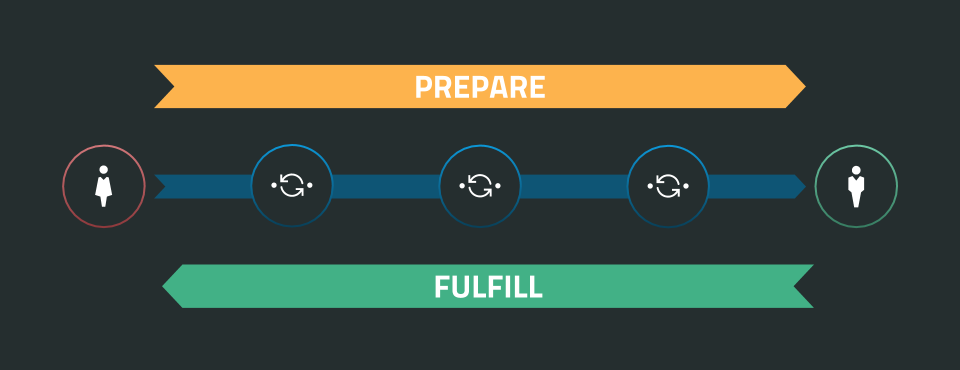
An interledger network is a decentralized network that allows for the transfer of value between ledgers. The interledger protocol is a set of rules that govern how ledgers interact with each other, and how value is transferred between them. The protocol is designed to be agnostic to the underlying ledgers, allowing for any type of ledger to be used in the network.
The Internet of Value’s vision is to make it easier to send value and to collect value. Interledger promises to connect all types of ledgers, from digital wallets to national payment systems to blockchains. Despite being open-source and lacking a single company, blockchain, or currency, the protocol is related to none of these. GateHub enables content creators to monetize their content online via Payment Payment Payment pointers, enabling users to connect to the platform. Uphold and Ripple offer tools, services, and programs to facilitate payment integrations, and Xpring offers an open platform for money.
What Is Interledger? A Guide To The Protocol Suite For Sending Payments Across Ledgers
What is an intelligent actor? Interledger is a network of computers that allows users to send and receive value across independent payment networks. The value of packets is routed similarly to that of the internet, as is the information that is routed. nodes are computers that are part of the Interledger network. What does it mean to be an interledger? Interledger is a set of protocols that allows you to send payments across multiple ledgers. To achieve this, Blockchain technology can be used to remove intermediaries from aninterbank payment network in order to create a decentralized, decentralized, and cross-border payment system. What is an interledger payment pointer? Payments can be received in the form of payment pointers, which are a standardized identifier for accounts that can receive them. How do I make Interledger payments? RippleX is a mobile app that allows you to send money between cryptocurrency wallets. You’ve already created a wallet at https://wallet.ilpv4.dev. To send XRP, you must first decide how much you want to send. By deciding on which payment pointer you want to send test XRP to, you can make it more convenient to test XRP. You can send a message by clicking Send.
What Protocol Does Ripple Use?
It is a cryptocurrency-based digital payment network that is based on blockchain technology, and it uses XRP as its token. In contrast to blockchain mining, Ripple uses a consensus mechanism, such as a group of servers owned by a bank, to confirm transactions.
Ripple’s Xrp Is Gaining Traction With Banks
Ripple is currently being used by banks to speed cross-border payments and find an alternative to traditional payment systems. Banks will almost certainly be using XRP in the future.
Is Ripplenet The Xrp Ledger?
RippleNet, the company’s global payment and liquidity network, is primarily based on XRP as a means of payment and liquidity. In essence, XRP operates on a distributed ledger, where transactions are processed and settled through gateways that are similar to private blockchains.
The XRP Ledger (XRPL) is a decentralized and public blockchain system run by a global developer community. The system can run at a high speed, be energy efficient, and provide long-term dependability. This platform offers developers a strong open-source foundation for developing on the most demanding projects at a low cost because it has a simple development process and low transaction costs.
The company, which describes itself as a fintech company that creates global payment products and the XRP payment system, was founded in 1997. The XRP token is not affiliated with Ripple Labs and has no monetary value. Despite the fact that Ripple Labs is headquartered in San Francisco, California, XRP is not distributed or controlled by the company. Over the course of many years, Ripple Labs has developed a number of innovative payment systems. Ripple is a global payment system based on blockchain technology that was founded in 2012. The XRP payment system was created by Ripple and aims to deliver faster, more efficient payments than traditional methods of payment. XRP, in contrast to Ripple Labs, is purported to be decentralized in nature. Ripple Labs does not own any XRP tokens and does not own the XRP currency. Instead, XRP is controlled by the XRP Foundation, a nonprofit organization established to promote and support the XRP payment system. Ripple Labs has a market capitalization of approximately $2.6 billion as of March 2019. It is a well-funded company. Because it has a strong track record in the fintech industry, its products have been widely used by major banks and payment providers in the world.
Xrp: Ripple’s Key Focus
Ripple’s primary focus is on the issuance and management of XRP, and it has stated that it will not sell or transfer any XRP for any other purpose.
Who Created Interledger?
Since the inception of decentralized payment protocols more than a decade ago, there has been extensive research into how they are carried out. Ryan Fugger established this project in 2004 with the goal of making Bitcoin more widely available, and he has since enlisted the assistance of a diverse group of contributors.
How To Make An Interledger Payment
As the world becomes increasingly connected, it is critical to find ways to facilitate payments across various systems. A project called Interledger aims to solve this problem by creating a protocol suite that will allow for secure, decentralized, and cross-border payments.
The first step toward making a payment with Interledger is to create a RippleX wallet. A wallet like this will allow you to send XRP to other people. When you’ve created your wallet, you’ll need to choose a payment pointer. It is possible to find one that is most closely related to the payment you intend to make.
After you’ve decided on a payment pointer, you’ll need to send your XRP to that address. You must enter the amount of XRP you intend to send as well as the payment pointer you intend to use. After all of this has been completed, you should be able to send your XRP to the person you intend to send it to.
Who Created Interledger Protocol
Interledger is an open protocol suite that enables the transfer of value across ledgers. The protocol was created by Stefan Thomas, Evan Schwartz, and Tom Jones.
Interledger is a blockchain protocol that is used to settle payments across various payment networks. As a result, intermediaries and central authorities are removed from the system as a result of the protocol connecting ledgers from multiple banks. The system is intended to reduce costs and the time required to complete cross-border transactions. It is a cryptographic method of locking funds between two parties in real time. In most cases, funds are released only after certain conditions, such as time constraints, are met, allowing the transaction to take place. The Interledger protocol, which can be implemented in atomic or universal modes, allows the implementation of two modes.
Xrp Ledger Consensus Protocol
The XRP Ledger consensus protocol is a unique consensus mechanism that allows for a decentralized and distributed ledger to be maintained by a network of independent validators. The protocol is based on the “Ripple Protocol Consensus Ledger” (RPCA), which is a variation of the “Byzantine Fault Tolerance” (BFT) algorithm. The XRP Ledger consensus protocol allows for near-instantaneous transaction finality, while also providing for a high degree of security and fault-tolerance.
Is Xrp Proof Of Consensus?
Ripple Ledger is the native cryptocurrency of the XRP network, a public blockchain that uses the federated consensus algorithm, as opposed to the proof-of-work and proof-of-stake mechanisms, due to the reputation of participants in the network, which are primarily known and trusted by each other
Is The Xrp Ledger Decentralized?
Using the XRP Ledger, a decentralized public blockchain, you can interact with other users. In reality, anyone with a computer can connect to a peer-to-peer network that manages the ledger.
How Does Xrp Validate?
The XRP Ledger has a new ledger version every few seconds. A ledger version is validated when the network agrees that it contains the correct contents; the contents of that ledger version can never be changed.